




-
SAPE: Demystifying Sub-band Aware Power-Equalization for Cellular Networks
Dingyu Zhang (Johns Hopkins University); Ish Kumar Jain (Rensselaer Polytechnic Institute); Renjie Zhao (Johns Hopkins University)
-
Beyond Wi-Fi: Private 5G for Better Multi-User Quality-of-Experience
Ushasi Ghosh (University of California San Diego); Shivang Aggarwal, Mohamed Ibrahim, Puneet Sharma (HPE Labs); Dinesh Bharadia (University of California San Diego)
-
Accelerating Emergency Location and Response in 5G and Beyond Networks
Alessio Scalingi (UC3M); Domenico Giustiniano, Francesco Pigato (IMDEA Networks)
-
SCOUT: User Plane Telemetry for NextG Cellular Networks
Sushila Seshasayee, Ushasi Ghosh, Qingyuan Zheng, Umesh Bellur (University of California San Diego); Dinesh Bharadia (UCSD)
-
mmRidge: Revealing Emergent Crowd Flow Structures with mmWave MIMO Radar
Anurag Pallaprolu, Winston Hurst, Yasamin Mostofi (University of California, Santa Barbara)
-
MUFASA: Localized Flood Sensing and Alerting via Autonomous Millimeter-wave Wireless
Tianyang Chen, Ahsan Waleed Nazar, Sennur Ulukus, Zhambyl Shaikhanov (University of Maryland)
-
Privacy-Aware Sharing of Raw Spatial Sensor Data for Cooperative Perception
Bangya Liu, Chengpo Yan, Chenghao Jiang, Suman Banerjee, Akarsh Prabhakara (University of Wisconsin-Madison)
-
Towards Automated RAN Configuration Tuning in Cellular Networks with Causal Learning
Leyang Xue, Bolun Zhang, Mahesh Marina (University of Edinburgh); He Yan, Yu Zhou, Cheuk Yiu Ip, James Klosowski (AT&T Labs Research)
-
Beyond-Voice: Leveraging Articulatory Motion for Next-gen AI-Assistants
Tanmay Srivastava, Amartya Basu, Shubham Jain (Stony Brook University)
-
Neural Architecture Search for Latency Constrained DNNs
Jinghua Yan, Sina Mahdipour Saravani (University of Utah); Xuecen Zhang, Vipin Chaudhary (Case Western Reserve University); Gerald Sabin (RNET Technologies); P. Sadayappan (University of Utah)
-
GazeSummary: Exploring Gaze as an Implicit Prompt for Personalization in text-based LLM Tasks
Jiexin Ding, Yizhuo Zhang (University of Washington); Xinyun Liu (Google); Ke Chen (University of Washington); Yuntao Wang (Tsinghua University); Shwetak Patel, Akshay Gadre (University of Washington)
-
SatExt: Generative AI framework for Spatio-Spectral Satellite Unification and Beyond
Nazish Naeem (Massachusetts Institute of Technology); Peder Olsen, Vaishnavi Ranganathan (Microsoft Research)
-
Mirror in the Sky: Democratizing Continent-Scale IoT Connectivity via Amateur Satellites
Jacqueline Schellberg (University of Wisconsin-Madison); Suraj Jog, Vaishnavi Ranganathan, Krishna Chintalapudi, Bodhi Priyantha (Microsoft Research); Bhuvana Krishnaswamy (University of Wisconsin-Madison)
-
Predicting Connectivity and Link Performance in Dynamic LEO Satellite Networks
Bin Hu, Feng Qian, Ahmad Hassan (University of Southern California); Morley Mao (University of Michigan); Zhi-Li Zhang (University of Minnesota -- Twin Cities)
s
-
Governance at the Edge: Agent-Driven Privacy Mediation for Mobile and IoT Data
Musfira Khan, Fatemeh Sarhaddi, Agustin Zuniga (University of Helsinki); Huber Flores (University of Tartu); Sasu Tarkoma, Petteri Nurmi (University of Helsinki)
-
No Guide, No Cheat: Detecting Smart Glasses via AR Optical Signatures
Hanting Ye, Tianyi Hu, Maria Gorlatova (Duke University)
-
Seeking Trust in Resource-Constrained Edge Networks with Mobile Agents: Complications with ZTA
Justin Henry, Derek Richins, Steven G. Weldon, Sumesh Kesavamoorthy Vijayalakshmi, Tim Price (Augusta University); Waylon Brunette (Augusta Univeristy)
-
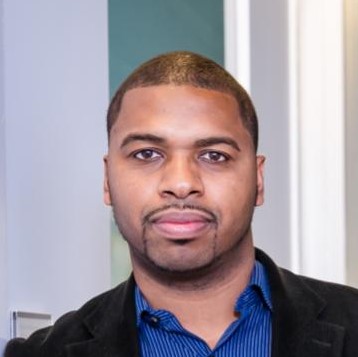
Title: From Smartphones to Smart Fields: Rethinking Mobile Systems for Software-Defined Agriculture Speaker: Prof Hakim Weatherspoon
Cornell University
Ithaca, NY, USA
Abstract: Agriculture is rapidly transforming into one of the largest real-world deployments of mobile and edge computing. Modern farms span thousands of acres populated by mobile robots, battery-powered sensors, autonomous vehicles, and distributed bioinstrumentation—all operating under severe energy, connectivity, and environmental constraints. This talk introduces the concept of the Software-Defined Farm (SDF), a unified architecture that treats farms as programmable cyber-physical systems composed of mobile sensing, actuation, and intelligence.
SDF integrates heterogeneous, resource-constrained devices through an open, low-power Internet-of-Things substrate, enabling continuous observation and closed-loop control of crops and livestock at unprecedented spatial and temporal resolution. At its core is a hybrid modeling framework that combines mechanistic system models with data-driven learning, allowing the system to adapt to biological variability, environmental dynamics, and operational uncertainty. Mobile sensing and robotic actuation form the physical interface, while edge and cloud components collaborate to support scalable analytics, bioinformatics pipelines, and real-time decision making.
This talk argues that software-defined agriculture represents a new frontier for mobile computing, where extreme intermittency, energy constraints, and physical embodiment fundamentally shape system design. I will discuss the architectural principles behind SDF, lessons learned from early deployments, and the emerging research challenges in building resilient, scalable, and autonomous mobile systems that operate directly in the physical world. These challenges highlight opportunities for the HotMobile community to help define the next generation of mobile-edge systems for large-scale, safety-critical, and environmentally embedded applications.
Biography: Hakim Weatherspoon is a Professor in the Department of Computer Science at Cornell University, Co-Director of the Cornell Institute for Digital Agriculture (CIDA), Cornell Bowers College of Computer and Information Science Associate Dean for Diversity, Equity, Inclusion, and Belonging, and the Chief Scientist of Exostellar, Inc (http://exostellar.io). His research interests cover various aspects of fault-tolerance, reliability, security, and performance of internet-scale data systems such as cloud and distributed systems. Weatherspoon received his PhD from the University of California, Berkeley. Weatherspoon has received awards for his many contributions, including the University of Washington, Allen School of Computer Science and Engineering, Alumni Achievement Award; Alfred P. Sloan Research Fellowship; and a Kavli Fellowship from the National Academy of Sciences. Weatherspoon has also been recognized for his work to promote diversity, earning the University of Washington, College of Engineering, Diamond award and Cornell's Zellman Warhaft Commitment to Diversity Award.
-
EarCalo: Earable-Based Energy Expenditure Estimation While Running
Yang Liu (Florida State University); Qiang Yang, Jake Stuchbury-Wass, Dong Ma, Cecilia Mascolo (University of Cambridge)
-
AquaTera: Sub-Terahertz Wireless to Enable Air-Water Communication
Abu Horaira Hridhon (University of Maryland); Sherif Badran, Josep M. Jornet (Northeastern University); Zhambyl Shaikhanov (University of Maryland)
-
SWAN: Spectrometry-based Wearable Biosensing for Monitoring Plastic Particles in the Human Body
Kevin Post, Reo Kuchida, Zhigang Yin (University of Tartu); Pan Hui (University of Helsinki and HKUST); Petteri Nurmi (University of Helsinki); Huber Flores (University of Tartu)
-
Inferring Indoor Layouts using Audio
Zhijian Yang (Amazon); Sattwik Basu, Chaitanya Amballa, Debottam Dutta (University of Illinois at Urbana-Champaign); Srihari Nelakuditi (University of South Carolina); Romit Roy Choudhury (University of Illinois at Urbana Champaign)
-
DecodeX: Exploring and Benchmarking of LDPC Decoding across CPU, GPU, and ASIC Platforms
Zhenzhou Qi, Yuncheng Yao, Yiming Li, Chung-Hsuan Tung, Junyao Zheng, Danyang Zhuo, Tingjun Chen (Duke University)
-
Towards Smart Wireless Power Transfer Through a Localizing and Beam-Focusing Magnetic Metasurface
Yawen Liu, Swarun Kumar (Carnegie Mellon University)
-
Saving Private Cellular: The Coordination Vacuum in CBRS
Muhammad Taimoor Tariq, Radhika Mittal (UIUC)
-
Who Knows What? Semantic Negotiation for Human-Supervised RAN Agentic Coordination
Eduardo Baena, Ankita Mandal, Abhiram Elango, Phuc Dinh, Dimitrios Koutsonikolas (Northeastern University)
-
EyeDAR: A Low-Power mmWave Tag that Senses and Communicates 3D Point Clouds to Enhance Radar Perception
Kun Woo Cho (Rice University); Yaxiong Xie (University at Buffalo SUNY); Ashutosh Sabharwal (Rice University)

